Back to Work, Back to School — What Your Cat Is Going Through on September 1st
All summer, the house was full. Kids home, adults working from home, someone always around. Then September hits — and the house goes completely quiet for eight hours straight. Your cat didn't get the memo. Here's what that transition does to a cat, and exactly what helps.
Cats are creatures of routine. Their nervous systems are calibrated to their environment — and specifically to the social rhythm of the home they live in. A summer of constant human presence creates a baseline expectation: people are around, interaction is available, the house has sound and movement and life in it.
September 1st changes that baseline abruptly. Not gradually — abruptly. The alarm goes off earlier, everyone rushes out the door, and the cat is left in a house that has gone from full to empty in the space of about twenty minutes. For some cats, that transition is barely noticed. For many others, it's the beginning of a slow behavioral deterioration that plays out over the following weeks in ways that confuse and frustrate their owners.
Understanding why it happens — and what your cat actually needs during this transition — is the difference between a September that works and one that doesn't.
What Actually Happens to Your Cat in September
The September transition isn't a single event. It's a process — and it unfolds in predictable stages over the first two to three weeks after the routine changes. Most owners see the end result (scratched furniture, a clingier cat at 6 PM, broken sleep at 4 AM) without understanding the progression that led there.
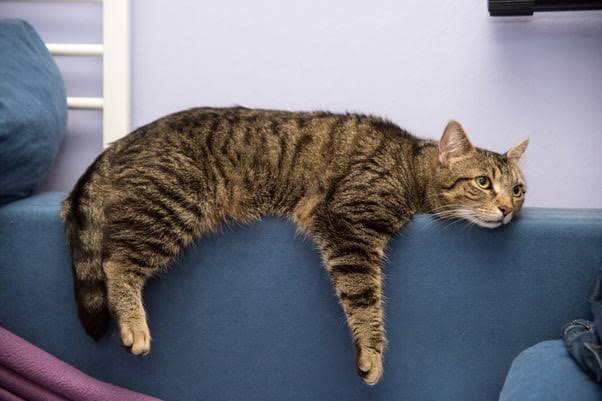
Your cat waits. It moves from room to room checking for the people that were there yesterday. It sits by the door. It sleeps more than usual — not because it's relaxed, but because sleep is the default response when there's nothing to engage with and nothing makes sense.
Most cats don't show distress on day one. They show anticipation. The assumption is that the people are coming back soon — because they always have before.
The pattern begins to register. The cat understands, at some level, that the long quiet is now the new normal for part of every day. This is when the first behavioral signals appear: increased vocalization when owners return, more intense greeting behavior, and the beginning of redirected scratching.
The scratching at this stage is primarily about scent-marking and stress regulation — the cat is reasserting its presence in an environment that has suddenly stopped reflecting it back. If the scratching post is adequate, most of this goes there. If it isn't, the nearest upholstered surface absorbs it.
This is typically the hardest week. The cat's sleep cycle has shifted — often toward sleeping all day and becoming active at 3 or 4 AM when owners are trying to sleep. Furniture damage reaches its highest point. Some cats begin over-grooming. Others become unusually demanding the moment anyone gets home, following owners from room to room and refusing to settle.
Week two is when most owners conclude they have "a problem cat." In reality, they have a cat in the middle of a completely predictable adjustment to a significant routine disruption — one that has identifiable solutions.
By week three, most cats have adjusted to the new rhythm — but the quality of that adjustment depends entirely on what the environment offers them during the hours they're alone. A cat with adequate enrichment settles into a new routine that works. A cat without it settles into one that doesn't: habitual furniture scratching, disrupted sleep, elevated baseline stress that shows up as clinginess, aggression, or withdrawal depending on the individual animal.
The goal is to get to week three's "new normal" via the good path, not the bad one. That's a preparation question, not a week-three intervention question.
A study published in Applied Animal Behaviour Science found that cats in households that experienced sudden reductions in human presence — such as the return to school after a long break — showed elevated stress biomarkers for an average of 14 days after the transition. Cats in enriched environments (vertical space, scratching resources, window access) returned to baseline significantly faster than those in unenriched settings.
Why Your Cat Scratches the Sofa in September
Furniture scratching in September is one of the most consistent patterns in cat ownership, and one of the most misunderstood. Owners assume it's because the cat is bored, or misbehaving, or needs attention. All of those things may be partially true — but the underlying mechanism is more specific than any of them.
Scratching serves three simultaneous functions for a cat: it maintains claw health, it activates scent glands in the paw pads (leaving a chemical territorial marker), and it provides a physical stress-discharge mechanism through the pulling motion. When stress increases — as it does during the September transition — the scratching drive intensifies as the cat's primary coping tool. The cat isn't scratching more because it's bored. It's scratching more because it's using its main stress regulation mechanism more.
The critical variable is where that scratching goes. A cat with an adequate scratching post — tall enough, stable enough, made of the right material — channels the drive there. A cat without one channels it to whatever upholstered surface is closest to where it spends most of its time. The sofa is usually the closest thing to the spot on the rug where the family used to sit together all summer.
"I didn't connect it at first — every September our sofa gets scratched, and every September I buy something to try to stop it. It wasn't until we got a proper cat tree that I realized the problem wasn't the cat. It was that she had nowhere adequate to actually scratch."
Spraying water, making loud noises, or physically moving the cat away from a scratching site addresses the symptom, not the cause — and adds an additional stressor to an already-stressed cat. Punishment during the September adjustment period worsens the stress load and typically intensifies the scratching rather than reducing it. Redirect to an adequate alternative; don't penalize the behavior itself.
The Two Zones Every Home Needs
When you break down what a cat needs during the hours it's alone, it comes down to two distinct functional needs — and most homes address neither of them adequately. These aren't luxury requirements. They're the behavioral basics that determine whether your cat's alone time is restorative or deteriorative.
Dedicated, adequate surfaces for the scratching behavior your cat will perform more frequently during September. The scratch zone is about stress regulation and scent-marking.
- At least 35 inches tall — allows full upright extension for adult cats
- Natural sisal rope, not carpet — distinct from household surfaces
- Completely stable — one wobble and the post gets abandoned permanently
- Positioned where the cat already gravitates when stressed (usually near the main sofa)
- Multiple surfaces if possible — a vertical post and a horizontal scratcher cover different scratch postures
Elevated, enclosed resting spots where the cat can genuinely decompress during the long quiet hours. The rest zone is about security and passive enrichment.
- At least one elevated platform at a window — passive enrichment all day from outdoor view
- One fully enclosed sleeping box — where the cat feels invisible and protected
- Wide enough to lie flat — a cramped platform produces vigilant rest, not restorative sleep
- Stable enough that the cat doesn't feel the structure shift when it settles in
- Positioned away from high-traffic noise sources (front door, appliances)
A well-designed cat tree covers both zones in a single piece of furniture: sisal posts for the scratch zone, wide platforms and an enclosed box for the rest zone. The combination — in one stable structure positioned next to a window — is the most efficient way to address both needs simultaneously. This is exactly why a proper cat tree is the most impactful single purchase you can make before September arrives.
If you're buying a new cat tree, buy it now — at least two weeks before the back-to-school date. A cat tree introduced on the day the routine changes is a foreign object in a disrupted environment. One introduced two weeks prior has been investigated, claimed, and scent-marked. By September 1st, it's part of the territory — a stable resource the cat already knows and trusts.
The same principle applies to any new enrichment: puzzle feeders, new toys, window perches. Introduce them during a calm period, not during the disruption itself.
What Your Cat Actually Needs — The Full List
A proper full-size cat tree
The anchor of the whole setup. Minimum 35 inches tall, with at least one sisal post the cat can fully extend against, a wide platform at window height, and an enclosed sleeping box. Position it next to the window where outdoor activity is highest — birds, street movement, garden life. This one piece of furniture covers more of your cat's September needs than anything else.
Window access with an active view
Outdoor visual stimulation is passive enrichment that runs all day without any human involvement. A cat with a good window view spends significantly more of its alone time engaged rather than restless. The cat tree platform should be at the window. If that's not possible, a cleared windowsill or a simple window perch at a height the cat can comfortably observe from fills the gap.
Rotating toys — set up daily
Leave two or three toys out when you leave in the morning. Put them away when you get home. Put different ones out the next day. Novelty is what drives engagement — a toy that's been sitting on the floor for a week is invisible to your cat. A toy that appeared this morning is interesting. Rotation takes thirty seconds and is one of the most effective boredom-reduction tools available.
20 minutes of active play at homecoming
The moment you walk in the door is the highest-energy point of your cat's day — they've been building anticipation since the last time you left. A wand toy session of 15–20 minutes when you arrive home discharges that built-up energy in the most productive possible direction. It reduces the 4 AM activity spike, decreases stress-scratching, and strengthens the bond that helps your cat regulate its alone time better over weeks.
A puzzle feeder for one daily meal
Feeding a portion of your cat's daily food through a puzzle feeder gives them a 10–20 minute foraging task — engaging the problem-solving behavior that indoor cats can't express through hunting. Set it up when you leave in the morning. It gives the cat something purposeful to do in the first hour of alone time, which is typically the hardest period of the day.
A worn item of your clothing near their resting spot
Leave an unwashed t-shirt or pillowcase near the cat's main sleeping area. Your scent is one of the most effective calming signals for a cat bonded to you. During the September transition specifically — when your absence is the source of the stress — olfactory contact with your scent measurably reduces anxiety markers even when you're not physically present.
The Morning Routine That Makes September Work
How you leave matters as much as what you leave behind. The morning departure is a high-stakes behavioral moment — the cat is watching, its nervous system is already reading your stress level and the change in routine, and what happens in the fifteen minutes before the door closes sets the tone for the next eight hours.
- Don't make a dramatic goodbye. Extended, emotion-laden farewells transmit anxiety to your cat. A warm but matter-of-fact departure — a brief stroke, a calm word, and then out the door — produces less pre-absence stress than a drawn-out goodbye. Your cat reads your emotional state directly. If you act like something significant and worrying is happening, they respond to that signal.
- Set the puzzle feeder before you leave. Give the cat something to do in the first minutes after you're gone. The puzzle feeder occupies the transition period when separation anxiety peaks — the first 30–60 minutes of alone time, when the cat is most likely to vocalize, scratch, or pace.
- Leave the TV or radio on low. Background human voice reduces the acoustic emptiness of a suddenly quiet house. A nature documentary or calm talk radio at low volume gives the cat something to orient to during the long quiet — and some cats will position themselves to watch it for significant portions of the day.
- Rotate the toys before you leave. Takes thirty seconds. Swap out what was available yesterday for something different. The cat will investigate the new options within the first hour — buying engaged time that would otherwise go to restless pacing or stress-scratching.
- Check the litter box. A clean box on departure reduces one common source of mid-day behavioral displacement. A cat that considers its litter box unacceptably full will find alternatives — and the alternatives are always your carpet or a corner of a room you'd rather they didn't choose.
- Keep the schedule consistent. The same departure time every day matters more than almost anything else. Cats calibrate their internal clock to household rhythms. A consistent departure time gives the cat a predictable structure it can adapt to. Irregular schedules — sometimes 7:30, sometimes 9:00 — maintain the unpredictability that keeps stress elevated.
The Evening Routine That Completes the Day
- Ignoring a cat that's waiting at the door — the homecoming is the day's emotional peak for them, not an inconvenience
- Feeding immediately and then sitting on the phone — feeding triggers engagement-seeking, and unmet engagement after feeding is a frustration cycle
- Postponing play until "later" — later usually doesn't happen, and the built-up energy goes somewhere else
- Getting annoyed at clinginess — clinginess in September is a predictable stress response, not a personality flaw to correct
- Acknowledge the cat at the door — a brief greeting before you do anything else costs thirty seconds and significantly reduces the intensity of demand behavior that follows
- 15–20 minutes of wand play before feeding — play first, then food; this mirrors the hunt-catch-eat sequence cats are wired for and produces the most settled post-meal behavior
- Let the cat choose contact level after play — some cats want to sit on you; others want to be nearby without touching; both are fine, and forcing the former when the cat wants the latter builds resentment, not bond
- A consistent bedtime for the cat — encourage the cat to settle in its enclosed sleeping spot with a treat at roughly the same time each night; over two to three weeks this shifts the 4 AM activity spike toward a more sociable hour
"Every September was a nightmare — scratched sofa, cat yowling at 4 AM, impossible to settle when we got home. This year we got a Cat Tree King before school started, put it by the front window, and started the play-before-feeding routine. By week two she had completely settled. The sofa is untouched. The 4 AM thing stopped. I genuinely didn't believe a cat tree would make that much difference."
Frequently Asked Questions
Why is my cat suddenly scratching the sofa in September?
September furniture scratching is almost always a stress response to the sudden reduction in human presence after a summer of consistent company. Scratching is a cat's primary stress-regulation mechanism — when stress increases, scratching frequency increases with it. If the scratching post isn't adequate (too short, wobbly, or wrong texture), that energy goes to the nearest upholstered surface instead. The fix is a proper cat tree positioned near where the cat already gravitates, not behavioral correction.
My cat wakes me up at 3 or 4 AM since school started. How do I stop it?
Early morning activity spikes in September are caused by a shifted sleep-wake cycle — the cat has been sleeping all day due to boredom and inactivity, and wakes up needing stimulation in the early hours. The fix works backward: reduce daytime sleep by increasing daytime enrichment (window access, rotating toys, a puzzle feeder), and introduce 15–20 minutes of active wand play in the evening before bed. This builds genuine tiredness that shifts the active period to more sociable hours over two to three weeks.
How long does it take for a cat to adjust to back-to-school?
Most cats reach a new behavioral baseline within two to three weeks of a consistent routine change. The adjustment is faster and more stable in enriched environments — cats with adequate vertical space, scratching resources, and window access adapt significantly faster than those without. Without environmental support, some cats maintain elevated stress behaviors for four to six weeks, and some develop habits (persistent furniture scratching, disrupted sleep) that persist beyond the adjustment period and require active behavioral intervention to resolve.
Is it too late to help if September has already started?
No — environmental improvements help at any point in the transition, not just before it starts. Introducing a cat tree, adding window access, and starting a consistent play-before-feeding evening routine will begin reducing stress behaviors within days of implementation, even if the transition is already two or three weeks in. The earlier, the better — but later is always better than not at all.
Should I get a second cat to keep mine company during the day?
A second cat can help with absence-related loneliness — but only if the cats are genuinely compatible, which requires a careful weeks-long introduction process. Many cats are naturally solitary and find a companion more stressful than solitude. Before considering a second cat, maximize the current environment: vertical space, scratching resources, window access, puzzle feeders, and consistent evening play. If the cat still shows significant distress after four to six weeks of a well-enriched environment, then a companion animal becomes worth considering.
Do cat trees actually help with September behavior problems?
Consistently and significantly — but only when they meet the actual requirements. A cat tree that's too short (under 35 inches), too unstable (wobbles during use), or positioned in an unused room won't change the behavior. A full-size tree with adequate sisal posts, a stable base, and at least one wide platform at a window — positioned in the room where the cat spends most of its time — addresses scratching, vertical territory, passive enrichment, and enclosed resting in one piece of furniture. That combination directly targets the four main drivers of September behavioral disruption.
My cat is suddenly very clingy when I get home. Is this normal?
Completely normal during September — and a sign the cat is bonded and social, not that something is wrong. Increased clinginess at homecoming is a predictable response to a day of reduced social contact. It typically reduces as the cat adjusts to the new routine over two to three weeks. In the meantime, acknowledge it rather than redirecting it — a brief, calm greeting at the door followed by a play session channels the energy productively and shortens the adjustment period.
The Bottom Line
September is hard on cats — not dramatically, not permanently, but genuinely. The transition from a full, social summer house to an eight-hour-empty workday house is a significant environmental change, and cats experience it as such. The behavioral fallout — scratched furniture, disrupted sleep, clinginess, over-grooming — isn't bad behavior. It's a predictable response to a specific situation, and it has specific solutions.
The most impactful thing you can do is prepare the environment before September 1st rather than react to the problems after they appear. A proper cat tree next to a window. A consistent morning routine. Twenty minutes of play when you get home. These things don't take much — but they change what September looks like for your cat completely.
A cat that goes into September with the right environment doesn't spiral through the adjustment weeks. It settles into the new routine faster, scratches the furniture less, sleeps through the night sooner, and greets you at the door with considerably more equanimity than desperation. That's a September that works — for both of you.
Get the Cat Tree in Place Before September 1st.
Two weeks of settling-in time before the routine changes makes all the difference. Wide platforms, real sisal, an enclosed sleeping box, built to last. Free shipping across the US.
Shop Cat Trees →